


Clear water where life moves freely
Clearflow began in 2005 in response to the drive toward sustainable environmental stewardship and stricter regulatory controls. Two decades on, our solutions still start from the same place: return water to the environment clean, with chemistry that is safe for the life that depends on it.
01 · Impact
Impact is measured downstream
The clearest way to show what a water treatment company does for the world is to look at the water it sends back. These are three of the approved project records we cite most often.
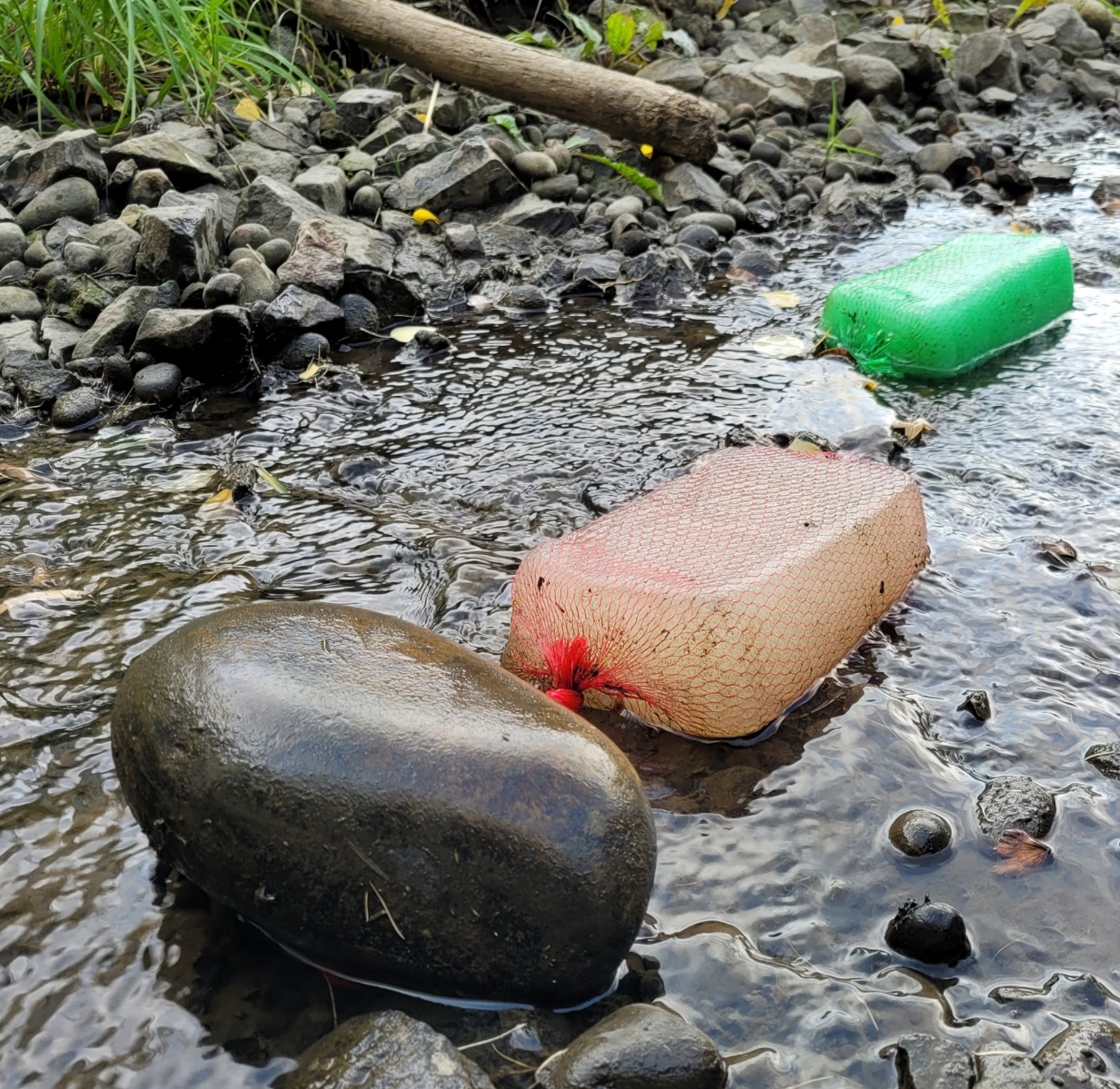 670M LSlurry released in the 2013 spillAlberta, CanadaObed Mine CleanupGel Flocculant blocks and treated fabric were installed in situ across rivers, streams and catchment basins, settling runoff upstream of the Athabasca and polishing ultra-fines on treated natural fabric.Read the case study
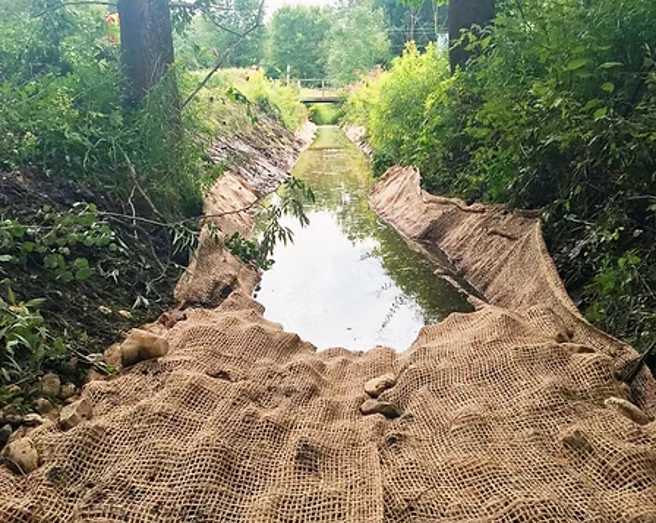 <8 NTUClarity at release into a fish-bearing streamEdmonton, AlbertaCloverbar RavinePassive in-stream dosing and about 100 m of treated geo-jute cleared turbid water feeding the North Saskatchewan River, the drinking-water corridor for roughly one million people.Read the case study
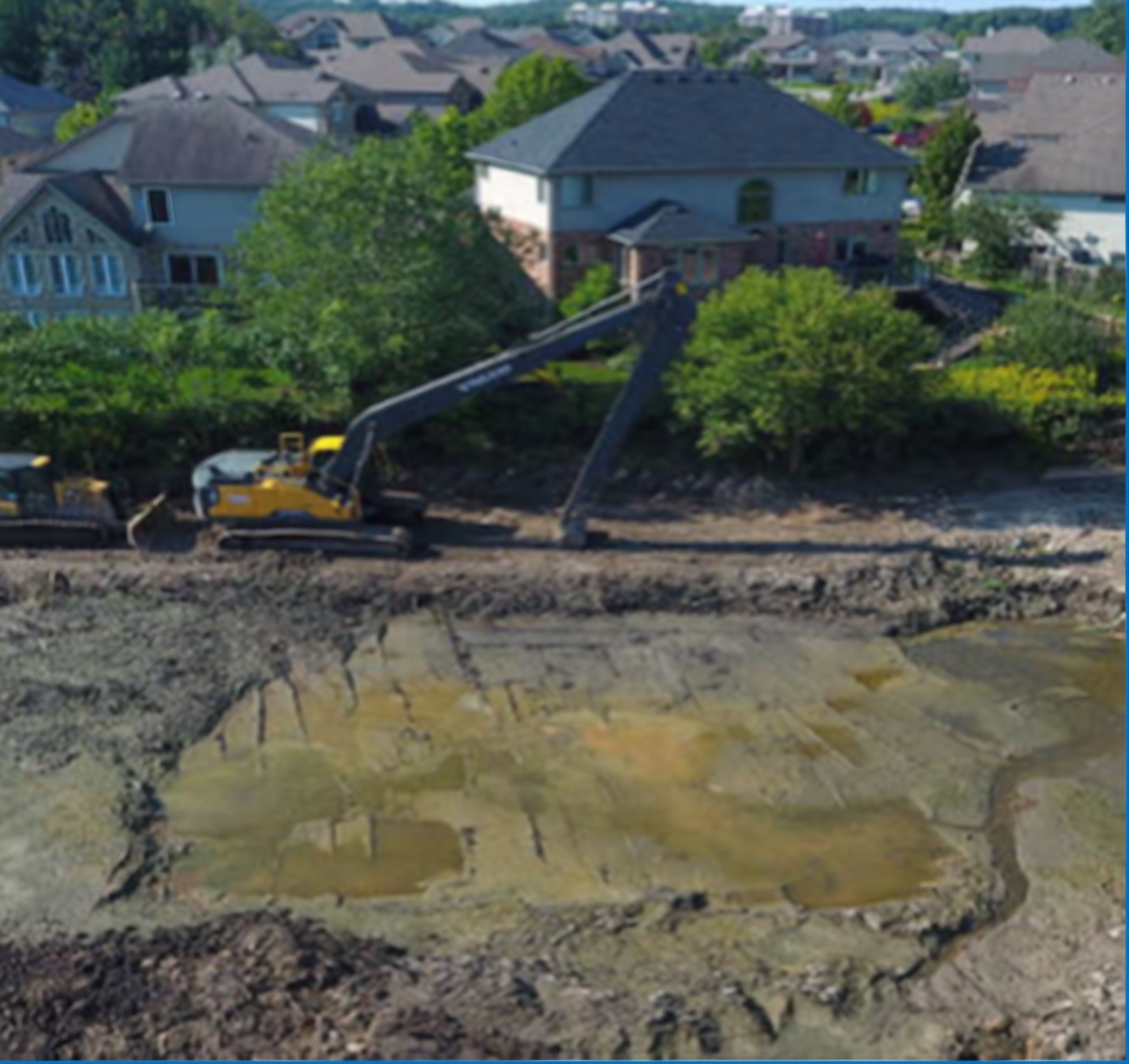 ~300 m³Sediment diverted from landfillWaterloo, OntarioWaterloo Storm Pond 53Gel Flocculant clarified the dewatering stream while Ultrabind solidified the slurry, so the material could be reused on municipal boulevards instead of hauled away as waste.Read the case study
Historical results are examples of past performance, not guarantees - site water chemistry, flow and design always govern the outcome.
02 · Sustainability
Sustainable thinking, built into the chemistry
Sustainability at Clearflow is not a program that sits beside the product line. It is a set of design choices made inside the products themselves.
01
Responsible resource use
Treated water and captured solids are treated as resources, not waste.
- Clarify surplus, pit and pond water for safe reuse, so sites rely less on scarce external freshwater sources.
- Bound material has been shown to improve plant and tree growth, so it can be reused for revegetation instead of hauled as waste.
02
Efficient processes
Gravity and flow do the work that pumps and power would otherwise do.
- No power-hungry makedown equipment - flow energy drives treatment with a smaller operational carbon footprint.
- Passive gel chemistry integrates with existing ditches, ponds and pumps, without building a permanent treatment plant.
03
Safe by design
Chemistry that protects the receiving environment it is released into.
- The molecules are too large to bioaccumulate and, unlike cationic polymers, will not suffocate fish or other aquatic organisms.
- Toxicity tests on fish, water fleas and algae, with validation by the University of Alberta, the University of Guelph and third-party laboratories.
04
Long-term impact
Solutions chosen for what they leave behind on land and in water.
- Ultrabind binds soil against wind and water erosion with no risk of corrosion or damage to vegetation, unlike salt-based alternatives.
- Fully biodegradable silt collection mats and all-natural jute capture sediment before it reaches rivers and watercourses.
03 · Technology
One design decision, three outcomes
Passive, flow-driven gel chemistry is the idea at the centre of Clearflow's technology. The same choice that makes it work also makes it efficient to run and responsible to release.
The core idea
Passive, flow-driven gel chemistry
Gel Flocculant blocks release into turbulent flow and self-dose to a safe, effective level.
- Technology
Flow energy, not machinery
Blocks use flow energy and particle dynamics to release flocculant. In stagnant water they swell but do not release, so dosing follows the flow.
- Business efficiency
Lower cost to operate
Passive gel chemistry and mobile GFR reactors replace expensive dosing plants, chemical totes and skilled operator overhead, and gravity-driven treatment lowers capital costs.
- Environmental responsibility
Release that protects habitat
Passive, self-limiting release protects aquatic habitat and supports compliant water release back into the environment.
From muddy runoff to reuse
Clearflow products work as a treatment train, and each stage hands the water or soil on in better condition than it arrived.
- 01TreatGel FlocculantPassive blocks trap silt, nutrients, metals and hydrocarbons as water flows past.
- 02AccelerateGFR reactorsMobile reactors treat higher flow rates in a smaller footprint, without new fixed infrastructure.
- 03PolishTreated jute & silt matsBiodegradable natural fibres capture ultra-fines before water returns to rivers and watercourses.
- 04ReuseUltrabindBinds captured slurry into a solid mass for transport or reuse, and improves soil for revegetation.
04 · Vision
The next twenty years
We keep pushing industry and society toward more sustainable, efficient water use - guided by a combined commitment to environmental and social sustainability.
“Provide the most environmentally friendly products available and minimize clients' carbon footprints.”
Recognised for environmental work
- ASTech Award - Outstanding Achievement in Environmental Technology and Innovation
- 2022 Sustainable Earth Small Business Awards winner
- 2010 Environmental Protection Award (SPCC)
2005
Founded by Jerry Hanna in response to the drive toward sustainable environmental stewardship and stricter regulatory controls.
2013
Passive in-situ treatment supports the Obed Mountain Mine spill response upstream of the Athabasca River.
2018
The City of Waterloo awards a storm-pond retrofit built on passive Gel Flocculant treatment and Ultrabind sediment reuse.
2022
Named a winner of the inaugural Sustainable Earth Small Business Awards.
2025
Two decades of dedication and impact in water treatment and environmental solutions.
Next
Advancements like the Residual Analyzer, setting new benchmarks for precision and environmental stewardship.
Start with your water
Our lab matches your water or soil sample to the right Clearflow product - free jar testing available.